


For foreign students (from outside Europe): to make visa procedures easier, the programme is listed in CAMPUS FRANCE (Reference: FOR.6797-ENS.13694), here : campus France
General presentation
the "Processes of the Future & Robotisation" Specialised Master's degree trains engineers and project managers who are experts in composite materials and additive manufacturing, both polymer and metal. Thanks to an integrated approach, they master materials, processes and robotisation in an industrial context.
these professionals are therefore able to design, manage and implement advanced manufacturing solutions for thefactory of the future. Their expertise covers the entire digital chain, from simulation to robot control.
what's more, they take into account quality, cost and lead-time constraints right from the early stages of development. This global vision enables them to effectively guide technological choices and strategic investments.
finally, the course draws on the expertise and resources of ESTIA's industrial platforms (Compositadour and Addimadour) and SIGMA Clermont.
Training methods and timetable
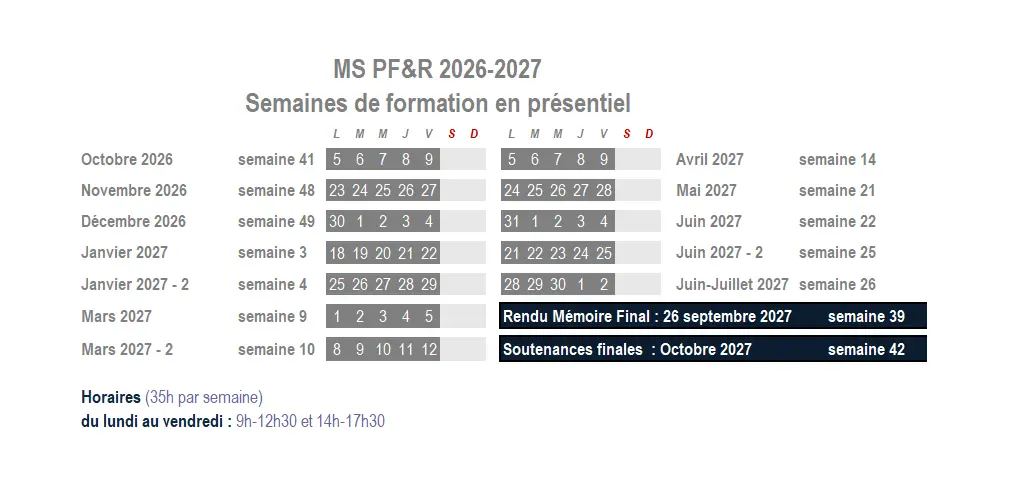
A timetable adapted to professional and initial training
The Specialised Master's® timetable is designed to meet the needs of continuing vocational training, while remaining perfectly adapted to initial training. This means that students can alternate effectively between periods of teaching and immersion in a company.
Inaddition, two of the twelve weeks of classes are held at SIGMA Clermont, in Clermont-Ferrand, reinforcing academic openness and inter-school exchanges.
Finally, the periods spent at the company are dedicated to writing an industrial thesis, which is defended at the end of the year. This applied research work enables students to develop their skills in a practical professional context, while contributing to industrial innovation.
Start date: 5 October 2026
Professional thesis defences in October 2027
Graduation jury in November 2027
Graduation ceremony in November 2027
Highlights
Loan of computer: To enable you to use specific software on a computer that meets technical requirements (version of operating system, available memory, etc.), the teaching staff recommend using computers loaned by the school.
Our network of industry partners :



Equipment
Students have access to a unique range of equipment, thanks to the combined resources of SIGMA Clermont and ESTIA, in particular ESTIA's industrial platforms: Visit our COMPOSITADOUR and ADDIMADOUR platforms
Our resources :
- Robotic cells for metal additive manufacturing (SLM, DED, WAAM processes)
- Fibre placement robotic cells (AFP) and composite draping machines
- Stamping presses for thermoplastic composites
- Finishing robots, machining centres
- Mechanical characterisation and metallurgy laboratories
- Design, programming and digital simulation software (see Adaone example below)
Students will be trained on state-of-the-art industrial robotic cells.
Cutting-edge software tools
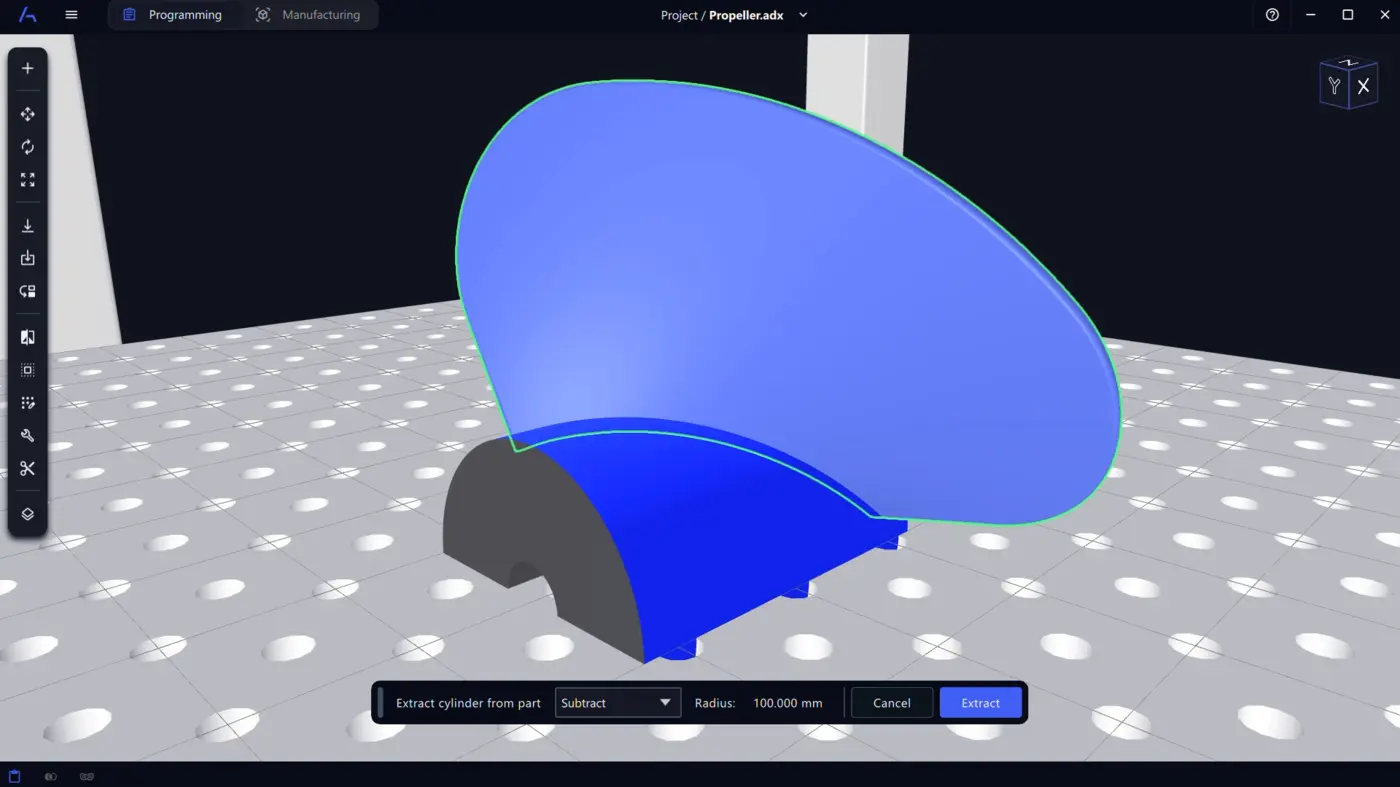
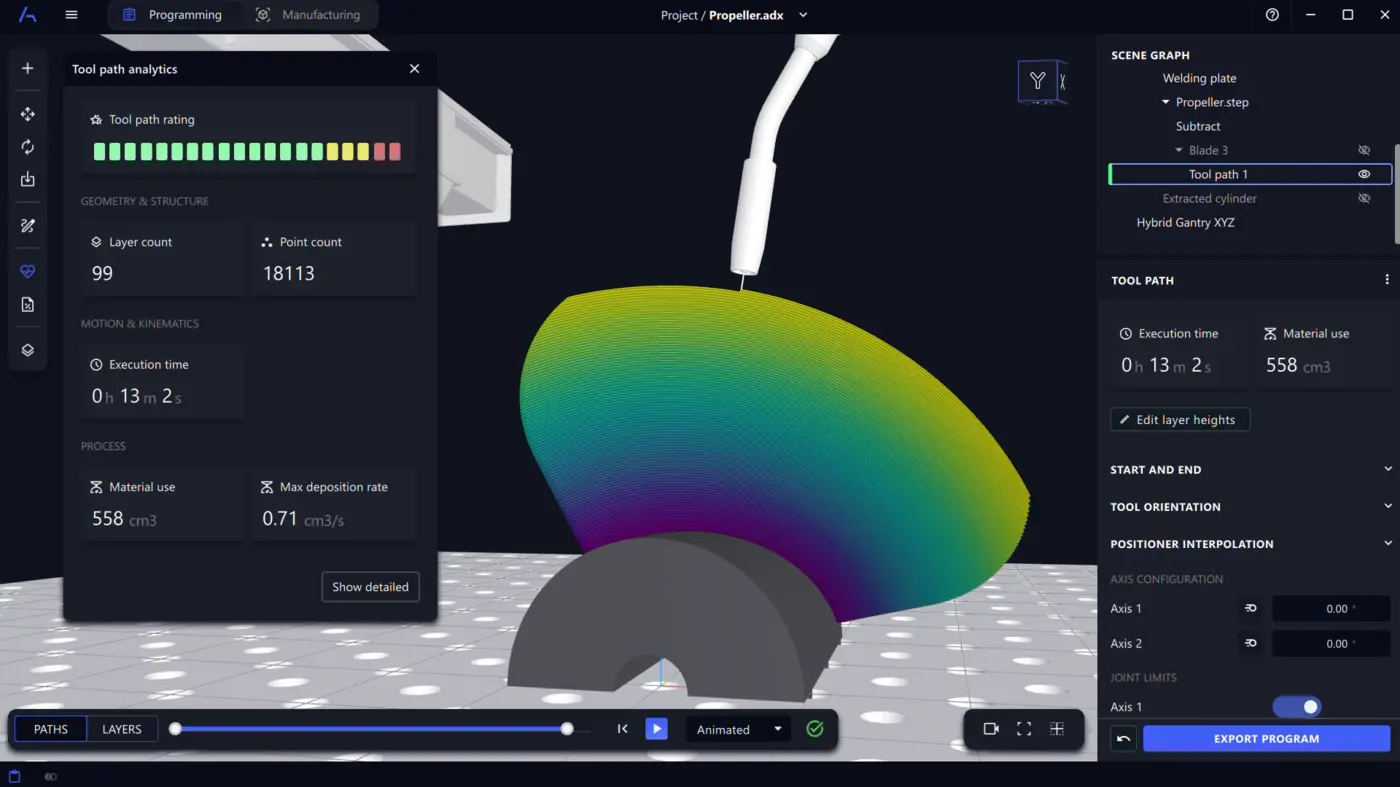
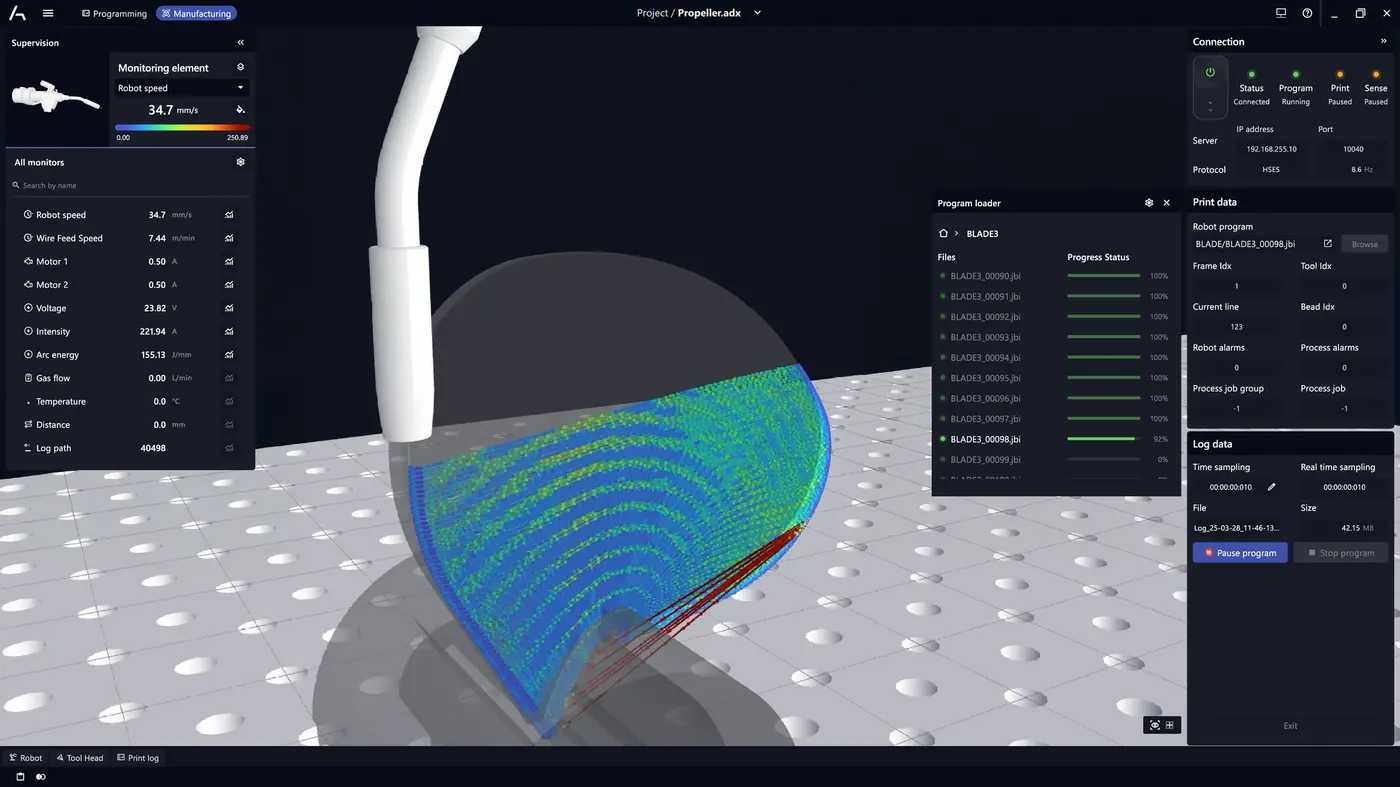
The additive processes are modelled on AdaOne, an environment used in industry to design digital twins
digital twins. AdaOne, developed by ADAXIS, is a robotised manufacturing software package for designing,
program, simulate, monitor and control additive, subtractive and inspection processes on industrial robots,
cartesian machines and hybrid cells. It is compatible with a wide variety of materials, including metal, polymer and concrete
polymer and concrete.
Here is an example of the process of creating a digital twin:
Programming
Simulation
Monitoring
Careers
Job opportunities
The aim of the Specialised Masters® Future Processes & Robotisation is to train engineers and managers in the design of advanced manufacturing processes: composite materials, additive manufacturing, advanced machining. Graduates master the technologies used by key accounts in the aeronautics, automotive, space, sports and leisure industries. They can also contribute their expertise to the specialised SMEs and SMIs that subcontract to these companies.
Graduates play a key role in leading process research and technological development. They propose a process development plan that is consistent with the company's product development plan and ensure that it runs smoothly. He/she directs the process testing and development phases, and may also take responsibility for production when the process is optimised. They interact with all the company's departments and customers. Depending on the developments, he or she is required to interact with all types of personnel, from operators and technicians to doctors. He or she is a reference expert, listened to by management when making strategic investment decisions. Once the process has matured, they may move on to manage production teams.
Benchmark jobs
- Expert engineer in composite processes: process simulation and optimisation
- Expert engineer in metal additive manufacturing: process simulation and optimisation,
- Project manager engineer for the design of composite parts or parts obtained using additive manufacturing,
- Methods and industrialisation project manager for composite or additive manufacturing parts,
- Project manager for the design of robotised cells for the manufacture of composite or additive-manufactured parts,
- Engineer in charge of additive or composite manufacturing lines..
Graduation and integration rates after 6 months
Our Specialised Masters® have had a 100% graduation rate for the past 4 years, thanks to the motivation of our students and the commitment of our teaching staff.
Six months after graduation, our alumni have no problem entering the job market:
- 100% employment in 2021
- 90% employment in 2022 and 2023, due to further studies or a move towards research (thesis)
Témoignages


And in video, a number of testimonials from our students on the PF&R Specialised Masters®
Teaching : Programme and teaching model
Total teaching time = 420 hours, over 1 year. The course is taught face-to-face only.
75 ECTS credits (1 or 2 years in continuing education)
Possibility of a professional training contract or internship.
The aim of the PF&R Specialised Master® programme is to give students the ability to tackle the problems of industrialising new processes implemented by robotised systems. The originality of this course is that it deals with both processes and materials and their robotisation.
The course, divided into 6 themes + the industrial thesis, takes place at ESTIA in Bidart and at SIGMA Clermont. Two options (150 hours) are available:
- additive metal manufacturing,
- implementation of composite materials.
Assessment methods:
The academic modules are assessed by continuous assessment. The professional thesis involves an oral presentation and a final dissertation.
Hours: 124h (12 ECTS)
Process optimisation; interaction between materials and processes
The aim of this theme is to understand and model the interaction between the process and the material in the context of the implementation of metal or composite additive manufacturing processes.
During the process, thermo-mechanical phenomena are induced by the transformation of the material. These phenomena influence the dimensions of the manufactured part and the state of health of the material locally and globally, and consequently the respect of functional expectations.
This theme presents the shaping processes, their parameters (i.e. the set of parameters) and their impact, as well as the characteristics of the materials used. It then looks at the development of a simulation tool for modelling and predicting the behaviour of a specific process.
At the end of this theme, the students understand the process and act on these parameters to improve the characteristics of the part produced.
Most of this theme is carried out in the form of practical work using the industrial resources of the Compositadour and Addimadour platforms.
Hours: 88h (11 ECTS)
Robotic cell; adaptation to processes; finishing
Initially, the fundamentals of robotics (modelling and robot kinematics) are reviewed before focusing on the implementation of processes. This theme provides an understanding of the constraints imposed by the process on the robotic system and vice versa. It provides an overall approach to the robotic cell, both in terms of design and implementation. Theme 2 is based both on programming and digital simulation tools available on the market and on real-life applications on the robotised cells of the Compositadour and Addimadour platforms.
At the end of this theme, students will understand the interactions between robots and processes, be able to model a robotised cell and envisage its industrial development.
Hours: 92h (10 ECTS)
Composite, polymer and metallic materials; characteristics specific to their use.
This topic concerns the design and manufacturing methods of manufactured products. The implementation of a process requires the application of part design methods, industrial process design methods and organisational methods to obtain compliant service parts.
The lecturers share their expertise in the form of lectures and case studies.
At the end of this theme, students will understand the implications of industrial choices on the feasibility and conformity of products and process performance. They will be able to approach the design of an additive or composite manufacturing process from part specification to industrial production.
Hours: 120h (12 ECTS)
Decision-making; Dimensioning; Metrology and control; Industrial organisation; Composites and Additive Manufacturing industrialisation methods.
The aim of this theme is to enrich the course by focusing on Industry 4.0 issues. Through two-day mini-seminars, students learn about AI, IT security, cobotics, human relations and sustainable development.
At the end of this theme, students understand the key issues and concepts that will enable them to make recommendations to their companies, specify their needs and talk to experts.
Teaching team
The teaching team is made up of equal numbers of :
- teacher-researchers from SIGMA Clermont and ESTIA
- professionals who are experts in the field of advanced processes
The mix of teaching staff combines a high level of academic training with a real hands-on approach. This enables students to acquire cutting-edge skills that can be applied directly in industry.
Mobilising blocks of skills and continuing studies
The programme cannot yet be implemented by mobilising isolated blocks of skills.
As this is an expertise-based course, the aim is to enter the professional world, although it is still possible to continue your studies with previously validated diplomas. If you have taken a VAPP to enrol in the Specialised Masters®, the benefit will cease at the end of the programme.
Admissions
Qualifications required :
Master's degree 2,
Engineering degree,
bachelor's degree with at least 3 years' professional experience (a VAP - Validation des Acquis Professionnels - is required beforehand)
Foreign diploma equivalent to the French diplomas required above.
Level of French :
For international applicants, a B2 level of French is required. A certificate will be requested.
Recruitment campaign
The recruitment campaign opens in January.
Three admission phases follow one another until July, giving you the opportunity to submit your application (including CV and covering letter), to attend an interview if your application is deemed admissible, and to find out the jury's decision as soon as possible.
Candidates whose applications are deemed admissible are invited to an interview with the course coordinators.
Final admission to the Mastère Spécialisé® is conditional on acceptance into a company to complete the professional thesis (professionalization contract or internship).
Admission timetable in 3 Phases :
Phase 1: from 19/01/2026 to 13/03/2026, responses on 19/03/2026, booking until 03/04/2026
phase 2: from 14/03/2026 to 13/05/2026, responses on 21/05/2026, booking until 03/06/2026
Phase 3: from 14/05/2026 to 03/07/2026, responses on 09/07/2026, booking until 22/07/2026
To finalise your application, you will be asked to pay an administration fee of €35. Applications will be considered as soon as the fee has been paid.
- You submit the documents on our jecandidate.fr platform. Additional documents may be requested once your application has been checked.
- If your application is deemed admissible by the panel, you will be invited to choose a date for an interview.
- The admissions panel will announce its decision (Passed, Rejected, On waiting list).
- If you are admitted, you have a fortnight in which to reserve your place on the course by paying €500.
N.B.: this sum will be refunded to you if you are doing your training under a sandwich course contract. In all other cases, it will constitute an advance on your enrolment fees.
Rates
Funding and study arrangements :
The Specialised Master® is open to working professionals wishing to follow a sandwich course, to jobseekers wishing to retrain or develop their career on a sandwich course (professional training contract), and to recent engineering or Master 2 graduates wishing to pursue a specialisation.
Funding can be provided on a personal basis, or by the company in the case of employees or work-study students (on work-study or apprenticeship contracts).
12,000 - employees, professionalisation contracts
Training costs are paid by the company in the case of a professionalisation contract or continuing education (employees).
8500 - students in initial training
It is possible to register for certain modules only, in order to be able to use them in blocks of skills:
Accessibility
The Specialised Masters® is handi-accessible.
EBS at ESTIA
The aim of the EBS-ESH scheme (Students with Special Needs and Disabilities) is to help any student who is experiencing temporary or permanent health difficulties, with a view to facilitating their studies at ESTIA. To date, ESTIA has almost 3% of students affected by this scheme, which is double the national average for other schools. ESTIA is committed to a certification process for the physical and educational accessibility of its courses.
Any student wishing to benefit from special arrangements can contact either the school life advisors (Clara BOUCON or Isabelle ETCHEVERRY), or contact the EBS ESH advisor directly (Patrick BADETS - p.badetsestia.fr). The aim is to define effective and discreet accommodation and compensation solutions in partnership with the student concerned. These solutions concern both classes, practical work, practical exercises and examinations, both face-to-face and distance learning at ESTIA, as well as integration into a company (work placement or apprenticeship).
How do I apply?
On the dedicated jecandidate.estia.fr platform
Contact: Mayder Bertiere - formation.continueestia.fr - 05 59 43 84 37