
Admissions | Alternance-Insertion | Formations
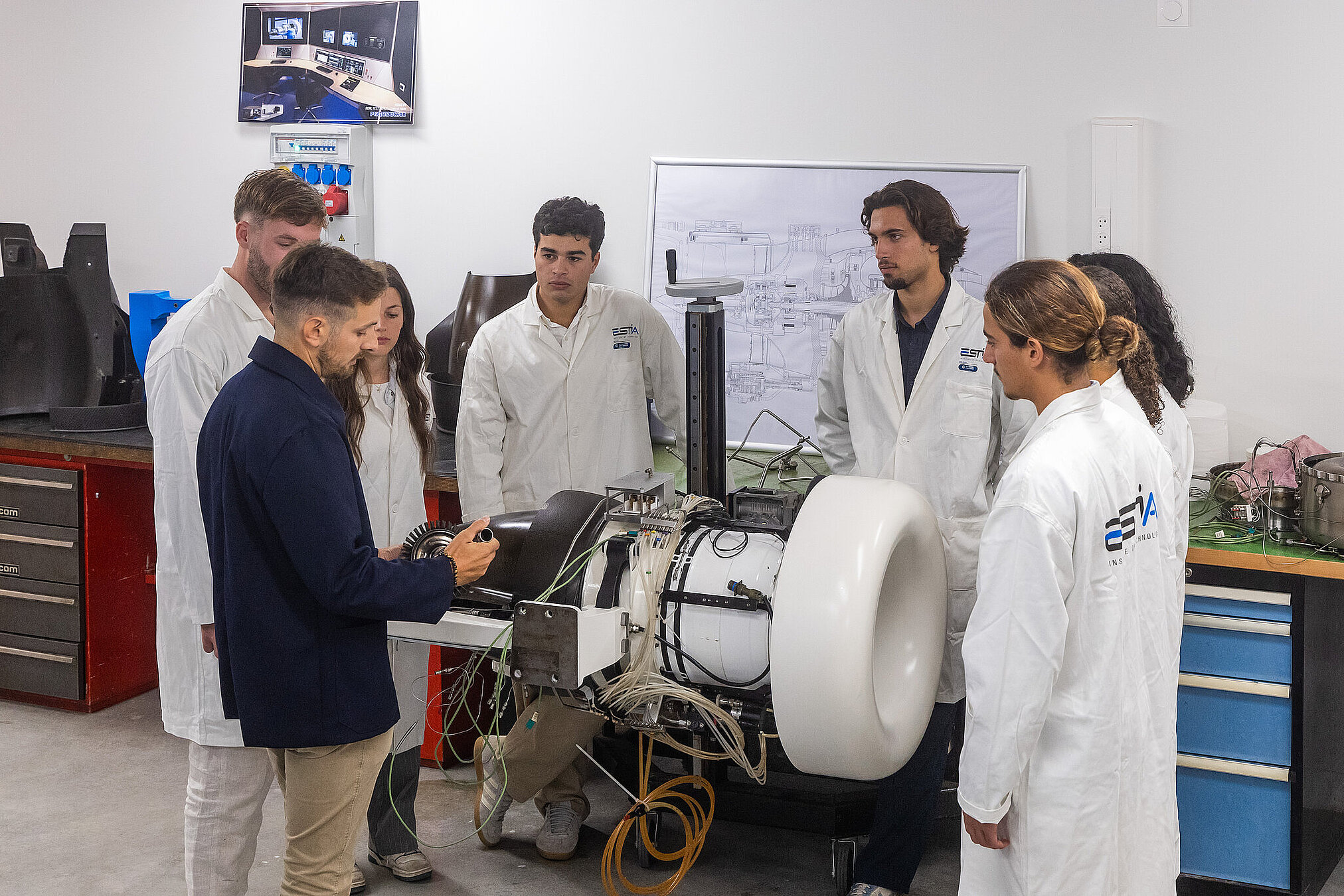
Soar into the future with aeronautical engineering
The aeronautics and aerospace sector is a field of excellence and constant innovation, attracting the brightest minds with a passion for technological challenges. Choosing an aeronautical engineering school is the first step towards a promising career, where you will contribute to the design, manufacture and maintenance of tomorrow's aircraft and space systems.
What is a school of aeronautical engineering?
An aeronautical engineering school is a higher education establishment that trains highly qualified professionals capable of designing, developing, testing and maintaining complex aviation and space systems. These schools offer a high-level education focused on engineering sciences, innovation and research, preparing students to meet the technical and environmental challenges of the sector.
Aeronautical and aerospace engineering: definition and challenges
Aeronautical engineering focuses on the design and manufacture of aircraft (planes, helicopters, drones), while aerospace engineering covers a broader field, including launchers, satellites and space systems. These two disciplines are intrinsically linked and share common scientific and technical foundations. Today's challenges are major: decarbonisation of air transport, development of new forms of mobility, space exploration, cybersecurity of on-board systems, and the use of increasingly high-performance composite materials. Aeronautical and aerospace engineers are at the heart of these innovations, actively contributing to the sustainable development of the sector.
Aeronautics training: courses and qualifications
Training in aeronautics generally leads to an engineering degree, conferring the grade of Master. The engineering course lasts five years after the baccalauréat, or three years after a scientific preparatory class (CPGE) or parallel admission. These courses feature in-depth scientific and technical teaching, complemented by project management, management and communication skills. An excellent level of English is essential, as aeronautics is a highly international sector, where a command of written and spoken English is essential for international engineering schools.
France's leading aeronautical engineering schools: a panorama of excellence
France, a pioneer in the field of aeronautics and aerospace, is home to a network of world-renowned French engineering schools. These establishments, whether generalist or specialist, train the elite of future engineers, thanks to rigorous academic programmes, strong involvement in research and close links with industry. Among these institutions of excellence, ESTIA stands out for its unique approach and its membership of the prestigious ISAE Group.
ESTIA: General engineering for the aeronautics and aerospace industries
ESTIA (École Supérieure des Technologies Industrielles Avancées), based in Bidart, has positioned itself as a trilingual generalist engineering school, offering a versatile curriculum that prepares its students to excel in a variety of sectors, including aeronautics and aerospace. As a partner school of the ISAE Group, ESTIA benefits from recognition and a network of excellence that enriches its training offer. Its teaching approach, based on innovation and projects, enables future engineers to develop key skills for the aerospace industry. ESTIA's commitment to this sector is reinforced by its active participation in NAASQ (Nouvelle-Aquitaine Air & Space Quality), a regional ecosystem dedicated to aeronautical and space excellence. What's more, the school recently consolidated its expertise by recruiting a person specifically dedicated to space development, demonstrating its determination to be at the cutting edge of technological advances in this field.
ISAE-SUPAERO: The flagship of aerospace engineering
ISAE-SUPAERO, located in Toulouse, is unanimously recognised as an excellent aeronautical engineering school in France and a world reference. As the founding school of the ISAE Group, it offers top-level aerospace engineering courses covering all aeronautics and space disciplines. Its academic excellence and strong commitment to research make it an essential institution for a career in aerospace engineering.
IPSA: The Institut polytechnique des sciences avancées, between tradition and innovation
IPSA, the Institut polytechnique des sciences avancées, is an aerospace engineering school with campuses in Paris, Toulouse and Lyon. It offers a 5-year engineering course, accessible after the baccalauréat, and stands out for its pedagogical approach based on projects and innovation. The Toulouse IPSA aeronautical and space engineering school is particularly well known for its close links with industry and its internship opportunities, training aviation engineers ready to meet the challenges of the sector.
ELISA Aerospace: expertise in systems engineering
ELISA Aerospace is an aeronautical engineering school with a strong focus on innovation and research, with campuses in Saint-Quentin and Bordeaux. It trains general engineers with a specialisation in aeronautics and space, focusing on new technologies and the challenges of Industry 4.0. As a partner school of the ISAE Group, ELISA Aerospace strengthens its foothold in the sector and offers interesting prospects for future aerospace engineers.
ESTACA: The school of new mobility
ESTACA is an engineering school specialising in new forms of mobility, including the automotive, aeronautical, space, naval and rail sectors. With campuses in Paris-Saclay, ESTACA Laval and ESTACA Bordeaux, it offers training recognised by industry. The Bordeaux campus, for example, offers a specialism dedicated to the decarbonisation of aeronautics, responding to current environmental challenges and training aeronautical engineers who are aware of the issues involved in sustainable development.
What are the aeronautical engineering schools?
The list of aeronautical engineering schools is varied and includes both public and private establishments. The ranking of aeronautical engineering schools is a useful indicator, but it is important to consider the specific features of each school, its specialisations, its industrial partnerships and its environment. The major aeronautical engineering schools offer excellent training, but there are also public aeronautical engineering schools that offer high-quality courses at lower tuition fees. The price of aeronautical engineering schools varies considerably between public and private establishments, with the latter having higher tuition fees.
ESTIA and the ISAE Group: a strategic alliance for the future
ESTIA (École Supérieure des Technologies Industrielles Avancées) stands out for its model of a generalist, trilingual engineering school with an international outlook. Its unique positioning and partnership with the ISAE Group make it a key player in engineering training, including in the field of aeronautics.
ESTIA: A general engineering school open to the world
ESTIA trains multi-skilled engineers capable of adapting to a wide range of sectors, from haute couture to sport and aeronautics. Its teaching approach emphasises innovation, project management and international openness, with a high level of English and opportunities for double degrees. The school prepares its students to become agents of change in a constantly evolving world.
ESTIA, a partner member of the prestigious ISAE Group
ESTIA is proud to be a partner school of the ISAE Group, an alliance of French engineering schools specialising in aeronautical and space engineering. This strategic partnership strengthens ESTIA's visibility in the sector and offers its students privileged access to a network of excellence. The ISAE Group, which includes renowned institutions such as ISAE-SUPAERO, aims to meet the needs of the aerospace industry by offering a wide range of high-level training courses and promoting joint research projects.
The opportunities offered by the ISAE Group partnership for ESTIA students
For ESTIA students, this partnership translates into numerous opportunities. They benefit from excellent training and easier access to collective development projects and high-level research activities in the field of aeronautics and aerospace. Whether for internships, end-of-study projects or pursuing a specialised master's degree, belonging to the ISAE network opens doors to exciting careers. What's more, ESTIA, with its campus in Bidart, close to the leading aeronautics regions (Bordeaux and Toulouse), offers an environment that is conducive to the development of future engineers in this dynamic sector.
How do I become an aeronautical engineer?
The path to becoming an aeronautical engineer is demanding but rewarding. There are several routes to specialist engineering schools, tailored to the different profiles of students.
The different admission routes
There are several possible routes into an aeronautical engineering school:
- After the baccalauréat: Many schools offer an integrated preparatory course in aeronautics or two-year integrated preparatory cycles, followed by a three-year engineering course. This is the preferred route for baccalaureate holders who want to go straight into aeronautics. The post-bac aeronautical engineering school is an increasingly popular option.
- After a scientific preparatory class (CPGE): This is the traditional route into the top engineering schools. After two years of intensive preparation, students sit national competitive entrance exams.
- Parallel admissions: Parallel admissions allow students with a DUT, a Licence (scientific or technical) or a BTS to enter the engineering cycle directly in the second or third year. This route offers flexibility and recognition of academic or technological achievements. The aeronautical engineering school after a DUT or the aeronautical engineering school after a Licence are options to consider for those who already have a post-bac course.
The training pathway: From engineering cycle to sandwich course
Once admitted, students follow a rigorous engineering course covering a wide range of scientific and technical disciplines. The years on the engineering cycle are punctuated by theoretical courses, practical work, team projects and work placements. Acquiring a solid level of English is crucial, and this is often reinforced by study periods abroad or specific oral English courses. More and more schools are offering sandwich courses, enabling students to gain significant professional experience while continuing their studies. Training to become an aeronautical engineer through a sandwich course is an excellent way of breaking into the world of work quickly.
Gabrielle Pinardon's inspiring career path: from aeronautical engineering to piloting
The career of Gabrielle Pinardon, an ESTIA alumna (class of 2017), is a perfect illustration of the versatility and opportunities offered by general engineering training in the field of aeronautics. Her testimony highlights the ability of engineers to reinvent themselves and pursue their passions, even if this means making a bold career change.
From Dassault Aviation to Oyonnair: a bold transition
After spending seven years with Dassault Aviation, a major player in the aerospace industry, as a Falcon customer support engineer and then in the systems design office, Gabrielle Pinardon decided to change direction. She chose to put her long-held passion for flying into practice by joining Oyonnair, a company specialising in medical evacuations and organ transfers. This transition demonstrates not only her courage, but also the solidity of the technical base acquired at ESTIA, which enabled her to excel in a cutting-edge field before embarking on a new professional adventure.
The versatility of the ESTIA engineer at the service of people
Gabrielle Pinardon's career is an eloquent example of the versatility of the ESTIA engineer. Her training has given her the skills needed to work on complex aeronautical systems and aerospace engineering, but also the adaptability to embark on a career as an airline pilot serving vital human missions. His corporate assignments at Dassault Aviation have given him invaluable expertise, and the examples of his current assignments at Oyonnair underline the tangible impact that engineers can have on society. This testimonial is a source of inspiration for all future aviation and aerospace engineers who are considering varied and committed careers beyond the traditional design office.
How much does an aeronautical engineer earn?
Salary is often a major concern for future engineers. The aerospace sector offers attractive salaries, reflecting the complexity of the assignments and the level of expertise required.
Salary of an aeronautical engineer: figures and prospects
The salary of an aeronautical engineer varies according to experience, specialisation, company size and geographical location. In France, an entry-level aeronautical engineer can expect a gross annual salary of between €35,000 and €42,000. With a few years' experience, this salary can rise rapidly. Experienced engineers, particularly those in positions of responsibility or specialising in cutting-edge fields such as structural design engineer, aeronautical test engineer, satellite integrator engineer, methods engineer or operational safety engineer, can achieve significantly higher salaries. The average salary for an engineer in France, all specialities taken together, is around €58,000 for an experienced profile.
Factors influencing remuneration
Several factors can influence the salary of an aeronautical engineer:
- Experience: As in most professions, experience is a key factor. A recent graduate will have a lower starting salary than an engineer with 5 or 10 years' experience.
- Specialisation: Some specialisations are more sought-after and therefore better paid. For example, experts in artificial intelligence, cybersecurity or innovative propulsion can expect higher salaries.
- Company size: Large companies in the aerospace sector (Airbus, Safran, Dassault Aviation, Thales, etc.) tend to offer more competitive salaries than SMEs.
- Location: Salaries can vary from one region to another. Jobs in the Île-de-France or Toulouse regions, bastions of the aeronautics industry, can be better paid.
- Additional skills: Mastery of several languages, management or project management skills, or expertise in specific software can also enhance an engineer's profile.
Job opportunities and specialisations for aeronautical engineers
The aeronautics and space sector offers a multitude of opportunities for engineers, with varied careers and a wide range of specialisations.
Sectors of activity and types of company
Aeronautical engineers can work in a wide variety of sectors within the aerospace industry:
- Aerospace manufacturers: Airbus, Boeing, Dassault Aviation, Safran, Thales Alenia Space, ArianeGroup, etc.
- Equipment manufacturers: Suppliers of systems and components for aircraft and spacecraft.
- Airlines: For maintenance, operations optimisation and fleet management.
- Research organisations: ONERA, CNES, European space agencies.
- Defence: Design and maintenance of tactical military vehicles.
- Consulting firms: Specialising in engineering or strategy for the sector.
Varied, cutting-edge professions
Job titles and responsibilities are many and varied:
- Structural design engineer: Specialising in strength of materials and structural modelling.
- Aeronautical test engineer: Responsible for in-flight or ground testing of aircraft and their systems.
- Satellite integrator engineer : Works on the assembly and validation of on-board systems on satellites.
- Methods engineer: Optimises manufacturing and assembly processes.
- Operational safety engineer : Ensures the reliability and safety of aeronautical systems.
- R&D Engineer: Develops new technologies and innovations.
- Production engineer: Manages production lines and quality.
- Maintenance engineer: monitors and repairs aircraft.
The importance of specialised Masters and composite materials
To specialise further or acquire dual skills, specialised masters (MS) are an excellent option after an engineering degree. They enable you to delve deeper into specific areas such as aerodynamics, propulsion, avionics or composite materials, which are essential in modern aeronautical construction because of their lightness and strength.
Aeronautical engineers face the challenges of sustainable development
The aeronautical sector is facing major challenges in terms of sustainable development. Engineers are on the front line in designing more fuel-efficient aircraft, developing alternative fuels (SAF), reducing noise emissions and optimising manufacturing processes to minimise the environmental footprint. This is a field where innovation is constant and where engineers play a crucial role in the industry's ecological transition.
Conclusion: Aeronautical engineers, key players in innovation and transition
Choosing a school of aeronautical engineering is an investment in a future rich in challenges and opportunities. Whether at institutions such as ISAE-SUPAERO, IPSA, ELISA Aerospace, ESTACA, or a general school like ESTIA, a member of the ISAE Group, future engineers are trained to be pioneers of tomorrow's technologies. Gabrielle Pinardon's career illustrates the diversity of career options and the positive impact that engineers can have on society. With attractive salaries and a multitude of career opportunities, the aeronautical sector continues to attract talent, offering exciting careers at the heart of innovation and the transition to more sustainable aviation. Engineering schools are the gateways to these exceptional careers, where every project is a new opportunity to soar towards excellence.
References
ESTIA engineering school, partner of the ISAE - ESTIA Group.
IPSA, Ivry-sur-Seine (94), authenticated opinions and ranking - L'Étudiant.
ESTIA engineering school, partner of the ISAE - ESTIA Group.
Engineering Salary 2025 | Complete Guide - Arefop.
What is the average salary of an engineer in 2026? - Michael Page.