
Recherche
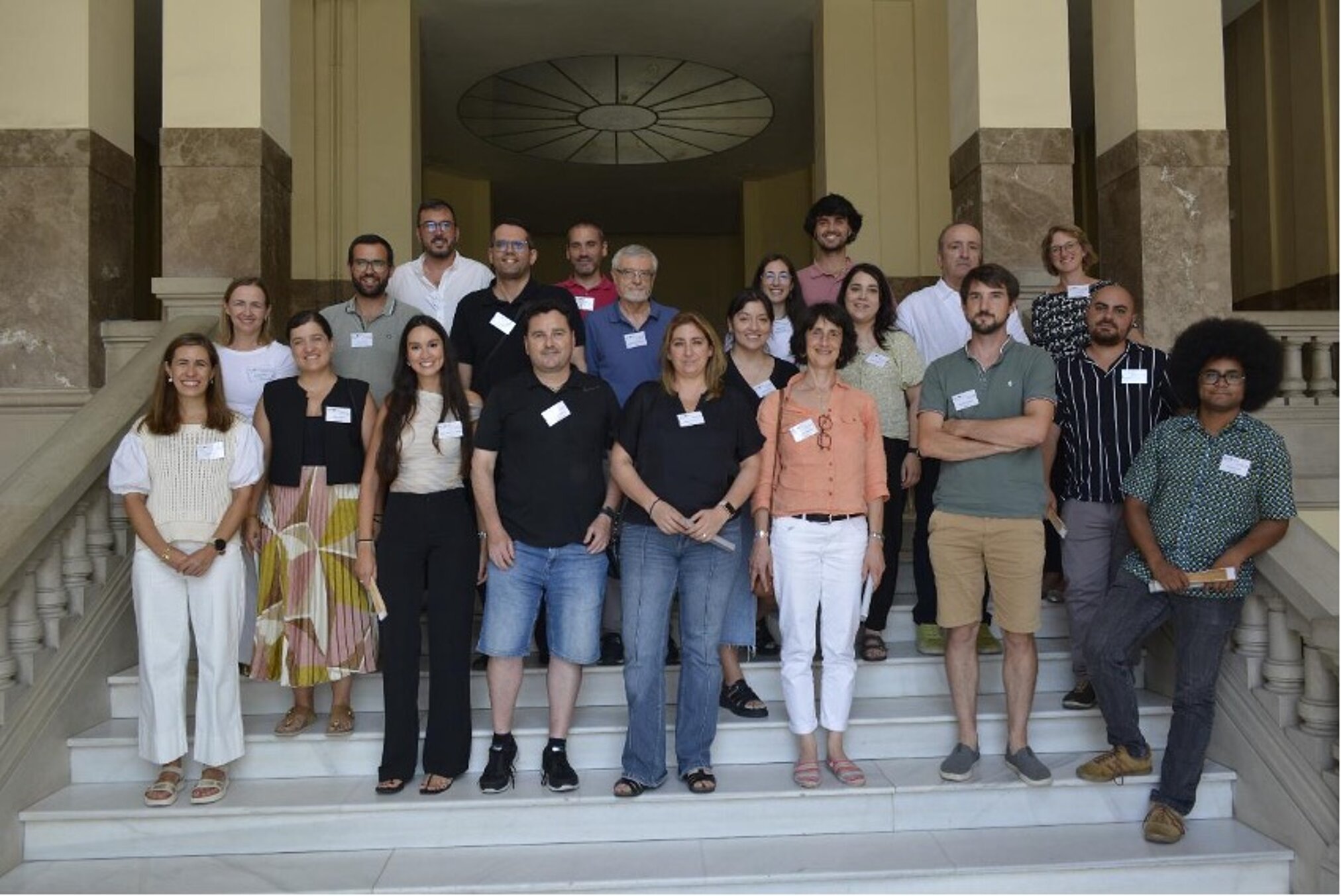
The event, organised by the Universidad Politécnica de Madrid (UPM) in collaboration with Canal de Isabel II and Zubigune Fundazioa, took place at the UPM's Escuela Técnica Superior de Ingeniería Agronomica, Alimentaria y Biosystems (ETSIAAB) in Madrid.
The SudWaMa project is a 36-month transnational initiative (June 2025 - May 2028), coordinated by Zubigune Fundazioa, whose main objective is to address the challenges of water efficiency and water quality in institutional buildings in the Sudoe area (Spain, Portugal, Southern France).
The project has 9 main beneficiaries from the three countries in the SUDOE area: Spain, Portugal and France. It is structured into three Work Packages (WP), corresponding to the project's objectives:
- To design a sustainable strategy for circular water management in institutional buildings, promoting water efficiency, water reuse, water quality assurance and changes in user behaviour.
- Demonstrate the viability of circular water management solutions (grey water, rainwater and wastewater) in different demonstration environments.
- Raise awareness and involve users through participatory actions, water laboratories and educational modules on sustainable water management.
Given the diversity of the partners involved, these objectives will be approached with an integral and multidisciplinary vision.
The SUDOE region is facing a number of water-related problems: frequent and prolonged droughts, pollution and pressure on water resources due to climate change and over-consumption. Transnational cooperation is essential because :
- It enables faster experimentation: the diversity of pilot sites (types of water: grey, rainwater, wastewater; different climates and uses) makes it easier to test and consolidate treatment processes and measurement tools on a larger scale.
- It overcomes regulatory and cultural barriers: the project will compare regulatory frameworks and remove cultural barriers to the adoption of the circular water economy, drawing on the experiences of each region.
- It promotes policy alignment: cooperation will harmonise policies, regulations and standards across regions and stakeholders for sustainable water management and climate change adaptation solutions.
- It creates sustainable networks: networks will be established to facilitate cross-border communication, cooperation and the exchange of knowledge.
The project plans to implement innovative solutions at four pilot sites in the three countries of the SUDOE region.
- On the ESTIA Campus (France), a campus-wide "Water Smart Grid" will be deployed to collect, store and manage rainwater for uses such as sanitation, watering and cleaning. IoT and AI sensors will be integrated. A rain garden will also be created to test water storage and infiltration and mitigate the effects of torrential rain.
- At the University of Coimbra and Águas de Coimbra (Portugal), efforts will focus on reusing grey water for secondary uses (watering gardens, flushing toilets, etc.), monitoring water consumption and deploying water efficiency measures such as flow reducers and dry urinals.
- In Spain, two pilot sites will be implemented:
o In Madrid, the Canal de Isabel II will install Sustainable Urban Drainage Systems to capture rainwater at source, improve its quality and increase its infiltration, thereby strengthening urban resilience to extreme rainfall. Grey water will also be reused in an institutional building for non-drinking purposes.
o In the Basque Country, BREEN and Zubigune will be piloting a fourth site simulating the sustainable management of wastewater using biological processes. The treated water, rich in nutrients, will be used for hydroponic cultivation in a greenhouse on a roof, with photovoltaic pumping and IoT monitoring.
The expected impacts of the project include
- reduced consumption of drinking water and improved water quality ;
- greater urban resilience to extreme weather events;
- promoting the circular economy and changing user behaviour;
- transferring infrastructure investment to urban areas.
SudWaMa is off to a strong start, driving a necessary and urgent change in the way we think about and manage water in cities. The commitment of all the partners and the wealth of approaches involved promise transformative results that could extend beyond the SUDOE region. As the project progresses, we will continue to share new developments and lessons learned that will contribute to fairer, more efficient and more resilient water management.
