
Formations
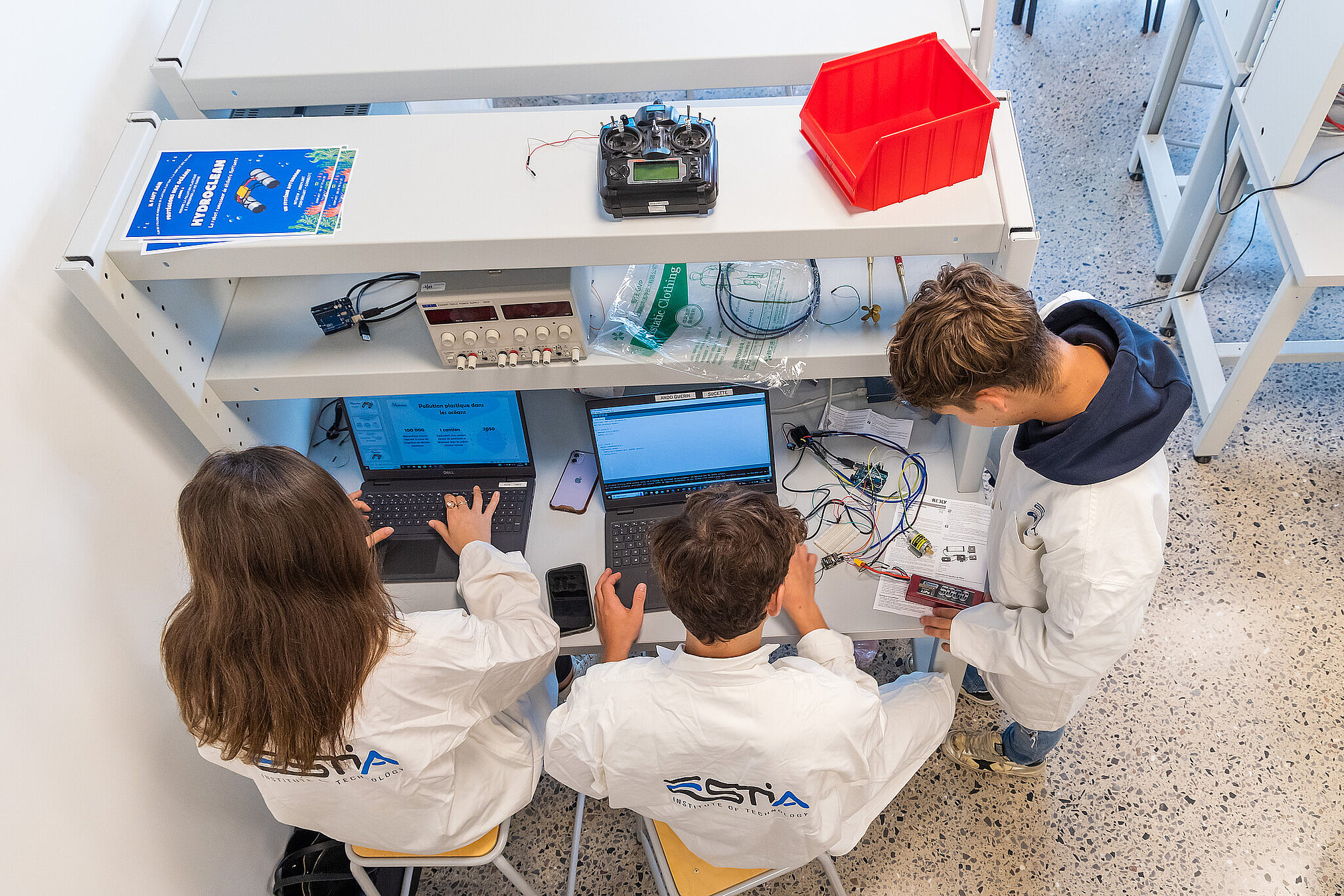
What is an electronics engineer?
An electronics engineer designs and develops the technical functions of a product or system. Their work may begin with analysing a requirement and drawing up a set of specifications. It continues with choosing a hardware architecture, selecting electronic components, designing circuit boards and defining the software required for the system to function.
The role is therefore not limited to designing a printed circuit board. The electronics engineer must ensure that the device operates under the intended conditions, complies with current standards and can be manufactured at a realistic cost and within a realistic timeframe. They work with technicians, IT specialists, mechanics, automation engineers, quality specialists and, at times, clients.
This approach explains the variety of job titles found in vacancies: electronics design engineer, electronics design engineer, digital electronics engineer, microelectronics engineer, power electronics engineer, development and test engineer, integration engineer or embedded electronics engineer. A career in electronics can also lead to roles in project management, production, research or business engineering.
What is the role of an electronics engineer?
The role depends on the sector and the stage of product development. In research and development, the engineer assesses the feasibility of a solution, carries out numerical simulations and builds a prototype. They define test scenarios, interpret measurements and rectify any faults identified. In production, they supervise a manufacturing unit, monitor quality and contribute to process improvement.
In a design office, they may design the hardware and functional architecture of an analogue or digital device. They specify component specifications, draw up schematics using CAD software and liaise with the teams responsible for board layout and routing. They are also involved in approval and certification dossiers, as well as the management of component obsolescence.
Embedded electronics engineers are involved when the system is intended to operate within a vehicle, an aircraft, a robot, medical equipment or an industrial machine. They must therefore take into account significant constraints: power consumption, space requirements, safety, vibration resistance, temperature, communications and response times. In the automotive sector, for example, electronics are used in electric vehicles, driver-assistance systems and connected features.
The APEC also describes roles such as test engineer, integration engineer, research engineer and business engineer. In the latter case, the professional translates the client’s requirements into a technical solution, prepares a quotation and oversees the production of the bespoke product.
What skills does an electronics engineer need?
The first skill is scientific. One must understand electrical circuits, analogue and digital electronics, microcontrollers, signal processors, sensors and power supply systems. Mathematics, signal processing and control systems are also important for analysing and controlling a device.
The second skill set relates to computing. An electronics and industrial IT engineer must be able to programme in C or C++, use Python, work with LabVIEW or develop applications for embedded systems. They must also be able to read technical documentation and liaise with the teams responsible for software design.
Design and simulation tools play a central role. CAD is used to produce schematics and prepare circuit board designs. Environments such as MATLAB or Simulink are used to model and test certain behaviours before the prototype is built. Depending on their specialism, engineers may also work with FPGAs, routing software or test benches.
Finally, interpersonal skills are crucial. Engineers must explain solutions, present results, organise projects and collaborate within a multidisciplinary team. Technical English is often essential, as suppliers, clients and development teams may be international. Curiosity, rigour, analytical skills and keeping abreast of technological developments round out the profile.
A career in electronics: how do you become an electronics engineer? What training is required?
The most common route involves five years of study following the A-levels. The pathway may begin with a preparatory class, a post-A-level course at an engineering school, a BUT or a BTS followed by parallel admission. It is also possible to undertake a Master’s degree in electronics, electrical power and automation, automation and robotics, or complex systems engineering.
Onisep specifies a minimum entry requirement of five years’ higher education (baccalaureate plus five years) for the profession of electronics engineer. However, the choice of a course should go beyond its title alone. It is important to consider the curriculum, projects, work placements, work-study schemes, international outlook, facilities and the accreditation of the engineering degree.
At ESTIA, the interdisciplinary approach combines, in particular, mechanics, electronics, computer science, automation and industrial sciences. The school also offers an engineering programme in mechatronics and embedded systems, delivered as an apprenticeship in partnership with CFAI Aquitaine. This programme covers electronics, electrical engineering, automation, sensors, communications, robotics and the design of mechatronic systems.
This combination is ideal for students wishing to become engineers in the embedded electronics sector without limiting themselves to a single family of components. It provides an understanding of the complete system: hardware architecture, software, mechanics, energy and industrial applications. The apprenticeship programme provides practical work experience and develops students’ project management skills.
ESTIA is also a partner of the ISAE Group, a scientific and educational community bringing together schools specialising in aeronautics, space and defence. This aspect provides a coherent environment for students interested in avionics, embedded systems, robotics or industrial technologies.
What is the salary of an electronics engineer?
Salary depends on level of experience, region, specialisation and sector. The APEC reports that 80 per cent of the salaries offered in the job vacancies analysed range from 35,000 to 53,000 euros gross per annum, with an average of 43,000 euros. This is a guide, not a guarantee: starting pay may vary depending on qualifications, work-study programmes, technical specialism and the size of the company.
For its part, Onisep quotes a starting salary of 2,917 euros per month for an electronics engineer. It is important to check the exact scope of this figure and to distinguish between gross salary and net monthly pay. With experience, career progression to roles such as project manager, production unit manager, technical expert, business development engineer or R&D manager can lead to higher pay.
Specialisms in high-voltage electronics can also influence career opportunities. Power electronics supports the electrification of transport and the energy transition. Microelectronics meets the demand for components and chip manufacturing. Digital electronics, the IoT (Internet of Things), hardware cybersecurity and embedded systems are in high demand across many cutting-edge sectors.
What career prospects are there for an electronics engineer?
Career opportunities span the aerospace, defence, automotive, rail, energy, telecommunications, healthcare, home automation and manufacturing sectors. A graduate may join a large company, an engineering firm, a laboratory, a start-up or a design consultancy.
The role of a failure analysis engineer involves identifying the cause of a malfunction and proposing corrective actions. An applications engineer supports a client in using a particular technology. A research engineer works on new solutions, whilst a development and test engineer verifies a product’s reliability before it is launched on the market. This variety is an asset when building a career path. A student might start by designing electronic circuit boards, move on to systems integration, and then progress to project management. Alternatively, they might specialise in signal processing, robotics, materials science, electrical power or embedded systems.
What are the main specialisations within electronics?
The fields of electronics cover complementary technical areas. Analogue electronics deals with continuous signals, whilst digital electronics is based on data processing using logic circuits, microcontrollers or processors. Other specialisations include power electronics, microelectronics, signal processing, telecommunications, automation and embedded systems.
In all these fields, electronic components play a vital role. Engineers select the sensors, resistors, capacitors, converters, integrated circuits and microprocessors that meet the specifications. Using CAD, they can design schematics, simulate the operation of a circuit board and prepare its integration onto a printed circuit board before manufacturing a prototype. This method enables certain errors to be detected at an earlier stage and improves the product’s reliability.
Innovations and new technologies in the electronics sector meet a wide range of needs: reducing energy consumption, miniaturising equipment, enhancing data security and making objects more connected. Areas of application range from the automotive industry to aerospace, including healthcare, energy, robotics, connected devices and telecommunications. A multidisciplinary education therefore helps future engineers to understand how a complete system works and to collaborate with specialists in IT, mechanical engineering or materials science.
Example of a career path for an electronics engineer: study, research, design and test development.
At ESTIA, students develop their skills through practical projects, such as building miniature solar-powered cars as part of a cross-disciplinary project. This project enables them to apply their knowledge of electronics, electrical power, computing and mechanics to design a functional vehicle, from analysing the specifications right through to testing. In doing so, they learn to select electronic components, optimise the capture and management of solar energy, programme control systems and work as part of a team. This type of project is a prime example of the kind of work an electronics engineer would undertake, as it confronts students with challenges similar to those encountered in the workplace: design, prototyping, innovation, problem-solving and performance improvement.
In summary
Becoming an electronics engineer means learning to design reliable, connected and useful systems. The course requires a solid scientific foundation, as well as the ability to work in a team and understand industrial constraints. By choosing a generalist and applied programme such as that offered by ESTIA, students can develop expertise in both electronics and computer science, explore embedded systems and prepare for a variety of sectors. To find out more and gain a practical insight into the different specialisms and the realities of a career in engineering, listen to the podcast *La voix de l’ingé*, produced by ESTIA. Through testimonials from professionals and graduates, it helps prospective students to better understand the study pathways, skills and potential career opportunities.
References
[1] Electronics Engineer (M/F) — APEC
[2] Electronics Engineer — Onisep
[3] ESTIA Engineer in Mechatronics and Embedded Systems
[5] ‘La voix de l’ingé’ podcast — ESTIA
[6] Post-A-level engineering school rankings: compare courses and choose the right one — ESTIA