Recherche
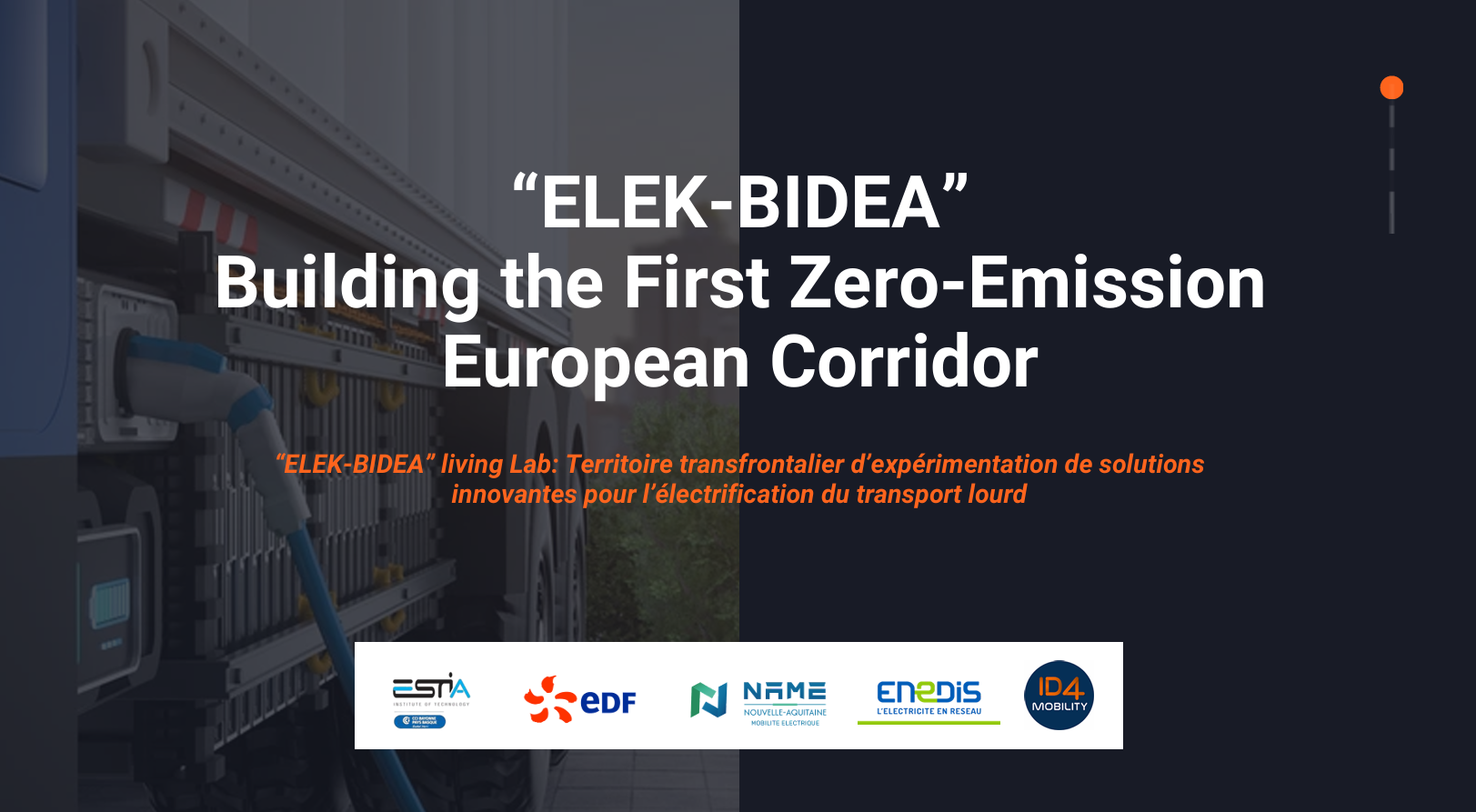
Our ambition: to make the Aquitaine–Euskadi–Navarre region a leading European showcase for zero-emission corridors.
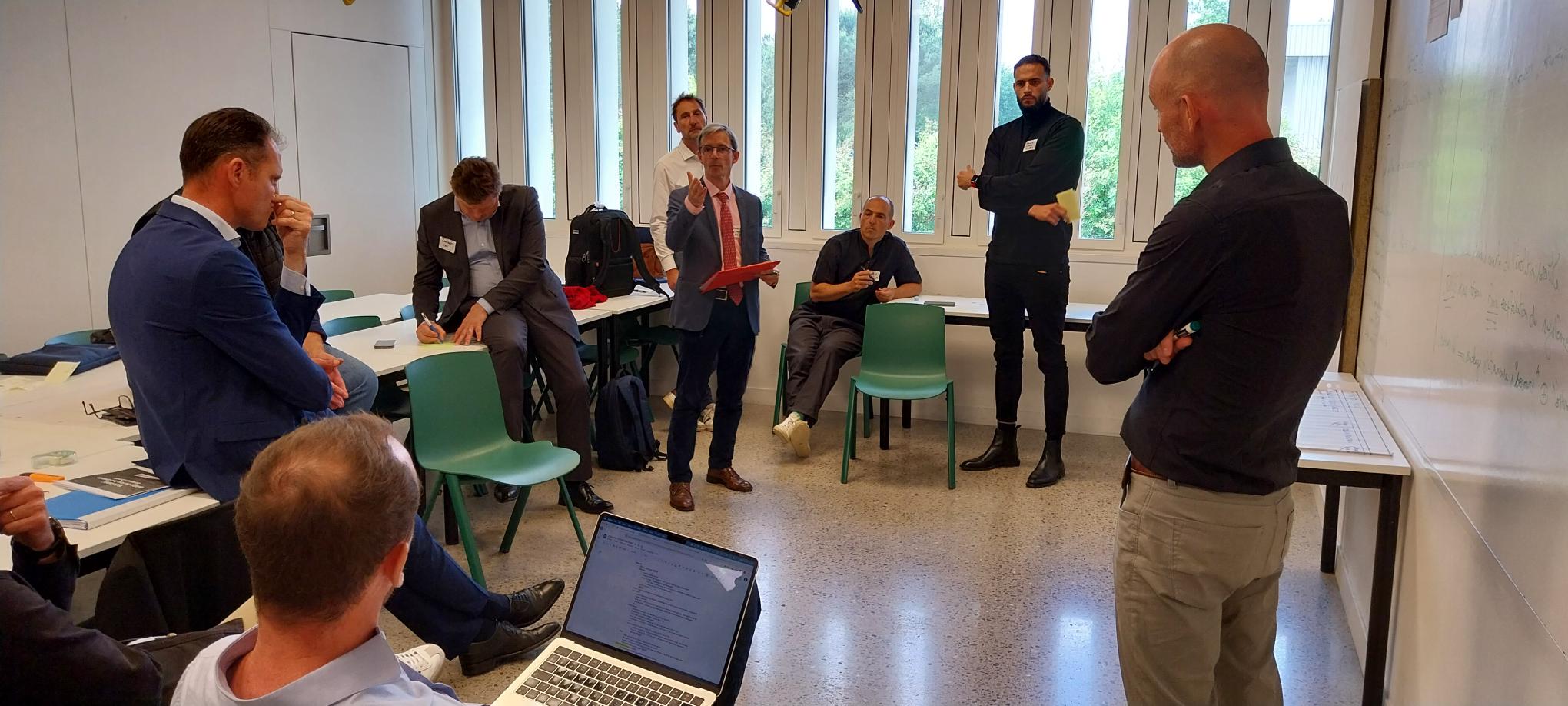
This workshop confirmed a key reality: the electrification of long-distance heavy goods transport is not merely a technological challenge, but a complex, multi-scale system.
> fundamental economic barriers (CAPEX, TCO, investment uncertainties)
> critical infrastructure and network challenges (power capacity, energy planning, interoperability)
> a necessary reconfiguration of logistics operations and usage patterns
> regulatory, territorial and cross-border challenges
> as well as decisive human and social acceptance factors
It is precisely to address this systemic complexity that ELEK BIDEA has been structured. We aim to co-develop an integrated approach based on four pillars:
- A cross-border Living Lab (Aquitaine–Euskadi–Navarre) as a testing ground on the scale of the Atlantic Corridor (~10,000 lorries/day)
- An Industrial Chair, dedicated to the co-creation of scientific knowledge and training
- A leading European event (EHET Forum) to bring the ecosystem together
- A technical committee (COTECH) to structure, prioritise and steer projects
Objective:
To develop a scientific and operational framework enabling:
- model the interactions between energy, mobility and logistics
- test high-power solutions (MCS), smart charging and multi-stakeholder systems
- optimise flows using data, simulation and AI
- remove barriers to adoption (economic, organisational and societal)
Thank you to all participants for their commitment to this first, foundational stage.