DD&RS | Recherche | Relations entreprises
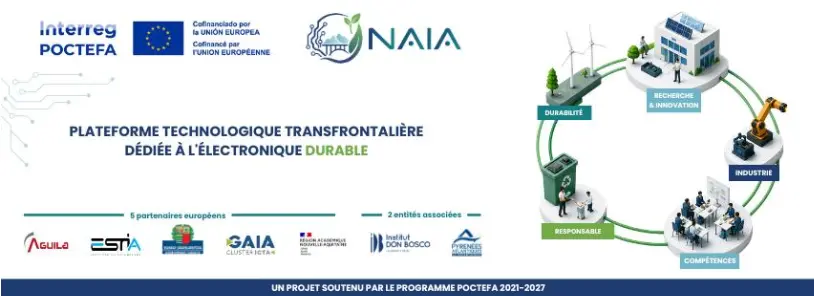
Faced with the challenges of decarbonisation, industrial relocalisation, securing supply chains and accelerating innovation, the Basque electronics sector must strengthen synergies between the players in its ecosystem to achieve sustainable and regenerative electronics. It is with this ambition in mind that AGUILA and its partners – ESTIA, the Nouvelle-Aquitaine Regional Education Authority, the Basque Government and the GAIA Cluster – have developed the NAIA project: a New Approach to Cross-Border Innovation in Advanced and Sustainable Electronics.
Supported by the Interreg POCTEFA 2021–2027 programme, this project promotes cross-border cooperation between Spain and France with a view to developing a shared cross-border technology platform (COMMON SPACE) dedicated to training, strengthening industrial capacity and developing advanced and sustainable electronic products.
Shaping the electronics sector of tomorrow
Against a backdrop of European reindustrialisation, supply chain pressures and environmental transition, NAIA aims to create a cross-border, shared-use technology platform (Common Space), a truly strategic infrastructure serving the electronics sector.
This Common Space will form the heart of tomorrow’s local electronics ecosystem by bringing together manufacturers, SMEs, research centres, training organisations and local authorities around state-of-the-art equipment, shared expertise and services. It will foster the emergence of a more resilient, innovative and sustainable sector, capable of strengthening the technological sovereignty of the Franco-Spanish region, creating skilled industrial jobs and generating new high value-added activities.By bringing together stakeholders on both sides of the border, NAIA will help to establish the region as a leading European hub for regenerative electronics, combining industrial excellence, economic competitiveness and environmental responsibility.
The pillars of NAIA
• Strengthening the region’s industrial and technological sovereignty: developing a resilient cross-border electronics sector by consolidating local capabilities in design, production, repair and recycling, in order to reduce strategic dependencies and secure European value chains.
• Creating value and industrial jobs in the region: supporting the emergence of new industrial activities, encouraging the establishment of innovative companies, developing skilled jobs and enhancing the region’s appeal to talent, investors and industrial partners.
• Accelerate the transition to regenerative electronics: promote business, design, manufacturing, repair, re-use and recycling models based on the circular economy, resource efficiency and the reduction of the sector’s environmental footprint.
• Make innovation a driver of industrial competitiveness: pool French and Spanish technological infrastructure, testing platforms and R&D expertise in order to accelerate technology transfer to businesses and the emergence of high value-added industrial solutions.
• Developing skills and supporting the transformation of SMEs: anticipating the sector’s skills needs, training the talent of tomorrow and supporting SMEs in adopting innovative technologies, processes and business models in order to strengthen their competitiveness in the long term.
The partners
NAIA is led by a Franco-Spanish consortium bringing together five leading players from industry, higher education, innovation and public institutions. By combining their expertise, infrastructure and networks, the partners have set themselves the task of creating momentum across the region and laying the foundations for a sustainable ecosystem.
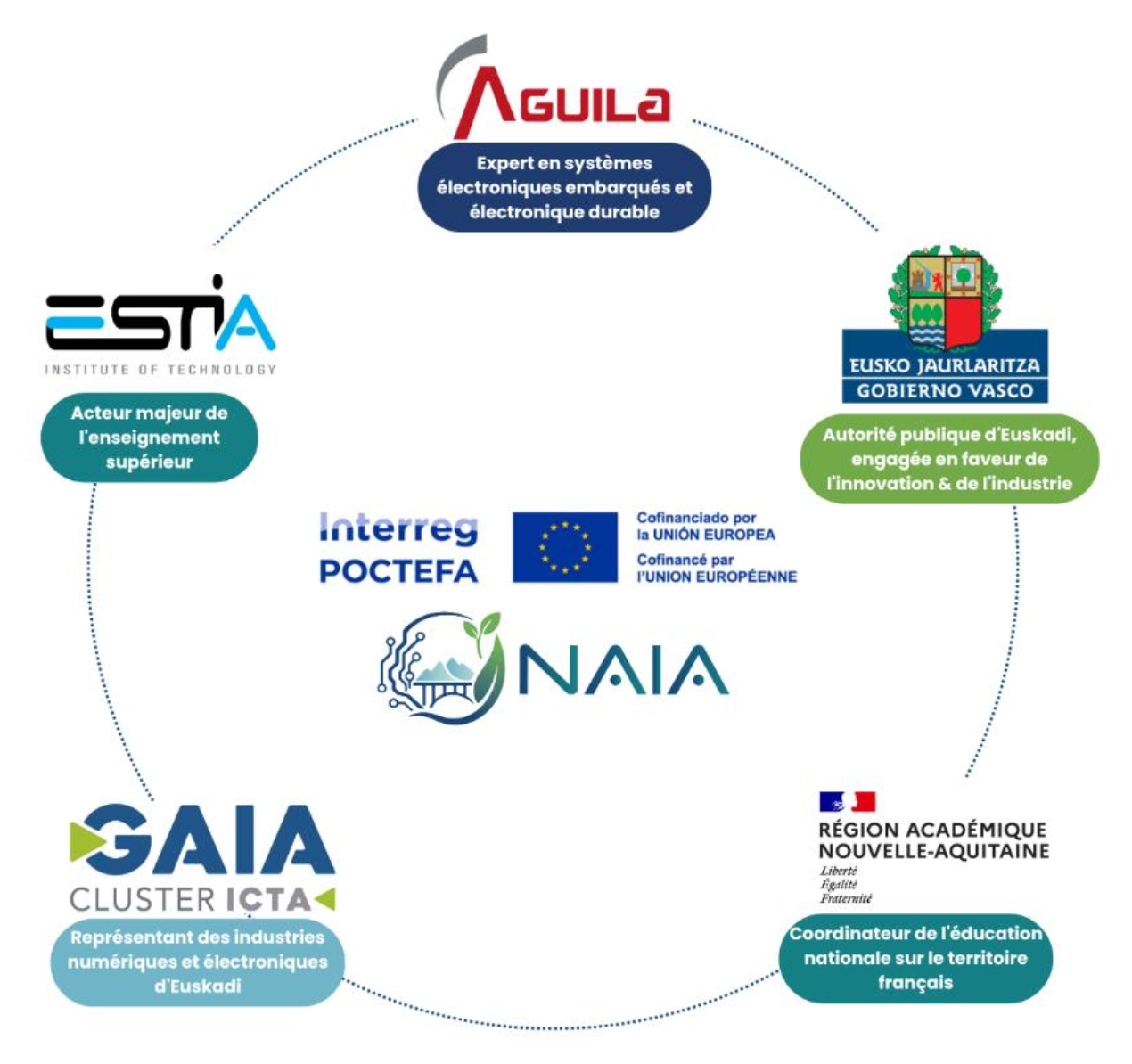
Five French and Spanish organisations with complementary areas of expertise are driving the NAIA project: embedded electronics, higher education, industrial innovation and cross-border educational coordination.
The Don Bosco Institute and the Pyrénées-Atlantiques Department are also associated partners in this project.
How to keep up to date with the project
In the coming months, a dedicated website will be launched: this will serve as the main hub for tracking the progress of the work, finding out about the partners and accessing news on sustainable electronics. An official LinkedIn account will also be set up to share real-time news, events and developments in the cross-border sustainable electronics sector.
Stay tuned – the NAIA adventure is only just beginning!
The NAIA project has been 65% co-funded by the European Union through the Interreg VI Programme –
A Spain-France-Andorra Programme (POCTEFA 2021–2027). POCTEFA aims to strengthen
economic and social integration of the Spain-France-Andorra border region. Its support is
focused on the development of cross-border economic, social and environmental
through joint strategies that promote the sustainable development of the
region.